
There is a fascinating article in The Independent today by Thomas Sutcliffe discussing How to Read a Novel by John Sutherland. In essence Sutherland it seems reckons you should be able to churn through a novel in three hours. Where I agree, is with the view held by Sutcliffe, is that some books, War and Peace as a good example, have bits which are read quickly and other bits that are like reading up hill. Keeping a standard pace is therefore very difficult and this does tend to challenge the Sutherland hypothesis.
Why I have no major problem with the idea that to keep up with the amount of books that are in print you have to read faster, maybe Sutherland should refer to the research quoted by Penguin that Says that a heavy reader gets through four books a year. Quite how many words that equates to every three hours (around 10-20 probably) is surely more of a problem than getting those of us who are already bookworms to get reading even more?
Friday, August 11, 2006
Thursday, August 10, 2006
book of books - Heart of darkness
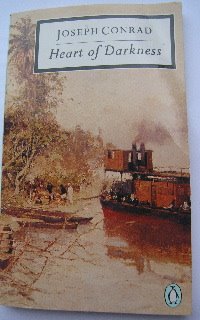
This book by Joseph Conrad is so well known for the film apocalypse Now and there are several things taken from the book - Kurtz and "the horror, the horror" - that stayed in the film. As is usual though the book is better than the film and it feels darker because you are left to fill in the blanks with your own imagination.
Plot summary
The story starts being told by a sailor on a boat on the Thames (Marlow) who tells his other crew members about how he had to go into the Heart of darkness to pick up a man running an ivory collecting station in Africa. Having picked up Kurtz, who was leading a disturbed existence and had gone mad by conventional standards, they drift back down the river with Kurtz's strength ebbing away until he dies. Marlow then goes and meets his fiance and tells her that Kurtz's last words were her name, rather than "the horror,the horror".
Is it well written?
It is a book that is able to convey light and mood in a consistent way that I have not come across before. It takes the reader in and as you go up river it gets increasingly unusual - with broken down huts and arrow attacks - and when they get to Kurtz's inner station with the heads on poles it is obvious they have arrived at somewhere very dark indeed. That darkness never seems to leave Marlow and in turn is spread to the rest of the crew and the book ends with a second narrative point of view concluding that the sea they are going on leads also into the darkness.
Is it worth reading?
It is a book that totals around 100 pages, but for all that it is so deep in colour, images and story movement that you have to really concentrate on every page. Those people who liked the film will see that the biggest thing that Conrad provided was a sense of mood. The only issue that some people might have is that unless you understand about colonialism and the brutality of that way of life a lot of the undercurrents of the book will be missed. Versions of the book without an introduction for that reason are probablt best avoided.
Leads to
In my case I am going for another journey into Africa type book - A burnt-out case by Graham Greene. The stepping stones towards Heart of Darkness include A Journey to the end of the night by Louis-Ferdninand Celine.
Version read - Penguin Twentieth Century Classics


Wednesday, August 09, 2006
Heart of darkness post III
I am on holiday this week updating this from a field in Dorset so I am keeping the posts shortish so I don't annoy the family or run out of battery.
Bullet points from pages 81 - 121
* After the boat is attacked everyone assumes the same people would have killed Kurtz, but they carry on up stream anyway
* When they find Kurtz he has tons of ivory and is clearly unhinged and has entered the heart of darkness to get those ivory stocks
* Kurtz gives Marlow his confidential papers and likes him because he is half English but also because he probably identifies that Marlow is not a company man either
*Marlow meets a Russian - the owner of the abandoned house earlier up stream - who is in awe of Kurtz and provides details of how he existed and his long trips into the woods with his tribe of followers to get more ivory
* Marlow warns him of the intention to bring an end to Kurtz's reign and the Russian leaves
* They get Kurtz onto the boat, he needs to be carried because he is ill, and as they head back down to the central staton the life ebbs out of him
* Kurtz's last words, heard by Marlow alone, are "the horror, the horror", after analysing them Marlow takes it as an indication that he had found peace with himself and his actions
* In the end Marlow meet's Kurtz's fiance, who is decribed as being swathed in darkness, apart from her forehead, and he tells her that the last thing Kurtz said was her name
* The story ends by cutting back to the Thames with the other narrative voice making the observation that the sea flows off into the heart of darkness
Light and darkness, both physical and spiritual are key to the book, the is the instant comment I would make but I will do a full review later in the week.
Bullet points from pages 81 - 121
* After the boat is attacked everyone assumes the same people would have killed Kurtz, but they carry on up stream anyway
* When they find Kurtz he has tons of ivory and is clearly unhinged and has entered the heart of darkness to get those ivory stocks
* Kurtz gives Marlow his confidential papers and likes him because he is half English but also because he probably identifies that Marlow is not a company man either
*Marlow meets a Russian - the owner of the abandoned house earlier up stream - who is in awe of Kurtz and provides details of how he existed and his long trips into the woods with his tribe of followers to get more ivory
* Marlow warns him of the intention to bring an end to Kurtz's reign and the Russian leaves
* They get Kurtz onto the boat, he needs to be carried because he is ill, and as they head back down to the central staton the life ebbs out of him
* Kurtz's last words, heard by Marlow alone, are "the horror, the horror", after analysing them Marlow takes it as an indication that he had found peace with himself and his actions
* In the end Marlow meet's Kurtz's fiance, who is decribed as being swathed in darkness, apart from her forehead, and he tells her that the last thing Kurtz said was her name
* The story ends by cutting back to the Thames with the other narrative voice making the observation that the sea flows off into the heart of darkness
Light and darkness, both physical and spiritual are key to the book, the is the instant comment I would make but I will do a full review later in the week.
Tuesday, August 08, 2006
Heart of darkness post II
I am on holiday this week camping so have opted for short bursts of bullet points from a shortish book to make life simplier.
Bullet points from pages 47 – 80
* At the coastal station Marlow is first introduced to the name Kurtz, who is the chief of the inner station
* He heads to the central station and again the landscape is full of strangeness with a drunk man claiming to have responsibility for the upkeep of the roads and a black man shot through the head
* Once at the central station he is told his steamer has sunk and calculates that it will take a couple of months to fix
* The man running the station introduces the name of Kurtz again and tells Marlow he must go up the river to find out what has happened because he thinks Kurtz is unwell
* Marlow meets the chief bricklayer who confides that Marlow's influential contacts (his aunt) might be a factor in why he has come and in regards to his position with Kurtz
* His wrecked boat is left unrepaired because no one from the coastal station can be bothered to send him the rivets despite them being in abundance
* There is a slight break in the story while Marlow gathers breath and for a moment you are back on the boat in the Thames and a different narrative point of view describes how it is so dark that Marlow can't be seen only his voice heard through the darkness
* Chapter II starts with Marlow hearing a conversation about Kurtz a man who apprently sailed 300 miles towards supplies and civilisation only to change his mind and turn around in his canoe and sail back into the wilderness
* Finally with the ship repaired the voyage up towards the inner station starts and going up the quiet river into the haert of darkness is described like an eerie dream with signs of desolation (an abandoned hut with a warning of caution) and then sounds of natives scraming in the fog
With just a mile and a half to go before they reach Kurtz's station they are attacked and it is at this point things end for today. Kurtz and the end of Marlow's tale await tomorrow...
Bullet points from pages 47 – 80
* At the coastal station Marlow is first introduced to the name Kurtz, who is the chief of the inner station
* He heads to the central station and again the landscape is full of strangeness with a drunk man claiming to have responsibility for the upkeep of the roads and a black man shot through the head
* Once at the central station he is told his steamer has sunk and calculates that it will take a couple of months to fix
* The man running the station introduces the name of Kurtz again and tells Marlow he must go up the river to find out what has happened because he thinks Kurtz is unwell
* Marlow meets the chief bricklayer who confides that Marlow's influential contacts (his aunt) might be a factor in why he has come and in regards to his position with Kurtz
* His wrecked boat is left unrepaired because no one from the coastal station can be bothered to send him the rivets despite them being in abundance
* There is a slight break in the story while Marlow gathers breath and for a moment you are back on the boat in the Thames and a different narrative point of view describes how it is so dark that Marlow can't be seen only his voice heard through the darkness
* Chapter II starts with Marlow hearing a conversation about Kurtz a man who apprently sailed 300 miles towards supplies and civilisation only to change his mind and turn around in his canoe and sail back into the wilderness
* Finally with the ship repaired the voyage up towards the inner station starts and going up the quiet river into the haert of darkness is described like an eerie dream with signs of desolation (an abandoned hut with a warning of caution) and then sounds of natives scraming in the fog
With just a mile and a half to go before they reach Kurtz's station they are attacked and it is at this point things end for today. Kurtz and the end of Marlow's tale await tomorrow...
Monday, August 07, 2006
Heart of darkness post I
I am on holiday this week camping so have opted for short bursts of bullet points from a shortage book to make life simpler than struggling to sit down and write long posts in email cafes across Dorset.
There are certain books that have become synonymous with films, without necessarily sharing the same name. One of the best examples is Heart of Darkness by Joseph Conrad, which will forever be linked with Apocalypse Now.
In the Francis Ford Coppola film Martin Sheen’s military agent is sent deep into the jungle to locate and kill Marlon Brando’s character, soldier that has gone wild and set up his own laws, and it is often mentioned as a throwaway comment that it is based on this book, without too many people even bothering to read it.
The slim volume is not too daunting and if you liked the film, and the Redux version is excellent, then there is really no excuse for not reading it.
My reason for picking it up is that reading the section on going into the jungle to the trading station in Journey to the end of the night by Louis-Ferdinand Celine reminded me of the film and I thought it was high time to read the book.
I am reading the Penguin Classics version, which has a 20 page introduction.
Bullet points for pages 7 - 47
Intro highlights: light is very important in the book so it starts as darkness falls and there is a combination of actual darkness and the metaphorical. The book is based on Conrad's own bitter experiences in the Congo.
* The story starts on a boat is moored up in Gravesend with four crew members and the Director of the company onboard
* One of the characters Marlow starts talking about how London had once been a place of darkness,– undiscovered and talks of how a Roman might have seen it as a river leading to death and misery in the past, a hostile wilderness
* He goes on to talk about his own experiences and his search for some place on the map to discover: “It had ceased to be a blank space of delightful mystery – a white patch for a boy to dream gloriously over. It had become a place of darkness.” Pg12.
* Marlow tells of how he became a skipper of a boat owned by a foreign trading company and headed out to replace a captain who had been killed
* He sails for thirty days and then enters the mouth of the river that will lead into the heart of the country and he starts to see strange things inclFrencha french man-of-war firing into the bush at 'enemy forces' and then once at the trading station the colonialists are blowing up bits of the mountain for no apparent reason
* In searching for the shade he comes across a group of natives that are the victims of the plans to build a railway and again the darkness of the trees is hiding death
You feel that as he gets ready to head up stream that you are leaving reason and goiunchartedhartered territory emotionally as well as physically
There are certain books that have become synonymous with films, without necessarily sharing the same name. One of the best examples is Heart of Darkness by Joseph Conrad, which will forever be linked with Apocalypse Now.
In the Francis Ford Coppola film Martin Sheen’s military agent is sent deep into the jungle to locate and kill Marlon Brando’s character, soldier that has gone wild and set up his own laws, and it is often mentioned as a throwaway comment that it is based on this book, without too many people even bothering to read it.
The slim volume is not too daunting and if you liked the film, and the Redux version is excellent, then there is really no excuse for not reading it.
My reason for picking it up is that reading the section on going into the jungle to the trading station in Journey to the end of the night by Louis-Ferdinand Celine reminded me of the film and I thought it was high time to read the book.
I am reading the Penguin Classics version, which has a 20 page introduction.
Bullet points for pages 7 - 47
Intro highlights: light is very important in the book so it starts as darkness falls and there is a combination of actual darkness and the metaphorical. The book is based on Conrad's own bitter experiences in the Congo.
* The story starts on a boat is moored up in Gravesend with four crew members and the Director of the company onboard
* One of the characters Marlow starts talking about how London had once been a place of darkness,– undiscovered and talks of how a Roman might have seen it as a river leading to death and misery in the past, a hostile wilderness
* He goes on to talk about his own experiences and his search for some place on the map to discover: “It had ceased to be a blank space of delightful mystery – a white patch for a boy to dream gloriously over. It had become a place of darkness.” Pg12.
* Marlow tells of how he became a skipper of a boat owned by a foreign trading company and headed out to replace a captain who had been killed
* He sails for thirty days and then enters the mouth of the river that will lead into the heart of the country and he starts to see strange things inclFrencha french man-of-war firing into the bush at 'enemy forces' and then once at the trading station the colonialists are blowing up bits of the mountain for no apparent reason
* In searching for the shade he comes across a group of natives that are the victims of the plans to build a railway and again the darkness of the trees is hiding death
You feel that as he gets ready to head up stream that you are leaving reason and goiunchartedhartered territory emotionally as well as physically
Sunday, August 06, 2006
Bookmark of the week

I picked this bookmark up at the Natural History Museum in London. It is different from the normal variety because it doesn't have a NHM logo on it but instead is just a picture of a T-Rex against a cliff landscape.
My sons love dinasours and this reminds me of the times spent with my eldest on my shoulders looking at the displays at the NHM and the time spent watching programmes about dinasours on television.
Saturday, August 05, 2006
book of books - journey to the end of the night

This book by Louis-Ferdinand Celine is the first part of a couple of autobiographical works that according to the dust jacket shocked readers, particularly in the US, because of the gritty portrayal of life. Presumably what they were interested by was the sexual elements of the story but there is something deeper going on here and it is a typical French literary experience because what you come away with is not necessarily a story but a mood. To experience Celine is like Camus and Sartre something that makes you think about how you feel rather than just empathising with how people acted.
The context
The story follows a medical student who enlists in the first world war, discovers he is a bit of a coward and then opts out of the conflict by going through a series of asylums and then in the end meets and breaks off a relationship with a woman. That then becomes a pattern for the book that even when things appear to be going well he has a pessimistic outlook on life and sure enough things go wrong, mainly because he ensures they do. Throughout the multiple locations of the book, France, Africa and the USA, the main character Ferdinand is ghosted by Leon Robinson who keeps turning up. Although Ferdinand starts to fear and hate him in the end with Robinson gone he is at a loss to know what to do next with his life.
is it well written?
it is not an easy read, but that is not necessarily because of the style, it is more about the reaction a reader used to experiencing a straight forward narrative might have to these wandering series of events. It is obviously a foreign book that has been translated and that probably has an influence on the text. It is a book that does not have the power of something like the Outsider by Camus or Nausea by Jean-Paul Sartre because the mood is sometimes obviously broken by the leading character rather than there being a consistent environment that leads to a breaking/changing point. This reminds you if anything of The Fall by Camus with someone talking about different anecdotes to tell a life story. It is hard to judge if it is well written but it is certainly not something that can be easily read.
Is it worth reading?
Not an instant answer to this one. Certainly it links into other works of literature and the Africa that Celine describes is echoed in the Africa of Conrad in The Heart of Darkness (my next weeks reading choice) and for that reason it should be a stepping stone as part of a process of reading the classics. One of the problems with a book like this that includes a character with relatively loose sexual morals is that for its time it was probably disturbing and provocative but now it is no longer shocking and rather seedy and disappointing and you end up agreeing with Madelone when she describes Ferdinand as a dirty beast. The story doesn't necessarily translate across the decades as well as some others.
Leads to
In my case because of the power of the images of colonial rule that part of the tale is going to lead to reading more about Africa in the form of Joseph Conrad's Heart of Darkness and Graham Greene's A burnt-out case. It should also lead to other French writers including as already mentioned in particular Albert Camus.
Version read - New Directions paperbook
Friday, August 04, 2006
Journey to the end of the night post V
The book ends in much the same way it has been going for the last couple of hundred pages. Things start to unravel a bit for poor old Ferdinand as he burns yet more bridges and heads back to Paris with funds running low and friendships few to mention. As the book moves to a finale his link to past experiences Robinson is killed and he ends up drifting like the barges on the Seine with no idea of where to go.
Bullet points from pages 396 - 509
* He is asked to stay on in Toulouse for a bit longer so Robinson can show him the sights but he overhears his friend and fiance saying how loathsome Ferdinand is and how is as a bad influence probably on drugs and a sexual animal
* Following that Madame Henrouille falls down the stairs in the crypt and rather than go and help herFerdinandd sneaks off and heads back to Paris.
* Back in the capital he hooks up with Parapine, a doctor he had consulted about Bebert's typhoid, and gets a job working with him in an asylum
* The boss of the asylum likes Ferdinand but starts to believe that Parapine is mad and a type of person that is harbouring potentially dangerous thoughts and plans he gets Ferdinand to teach him English then leaves him in charge of the asylum as he tours the world
* Robinson arrives having walked out on his fiance, Madelon, but is worried she might tell the police he tripped up the old woman and killed her
* Sure enough Madelon arrives and after Ferdinand has got involved, attempted to soil her relationship with further sexual advances, she has a row with Robinson in a taxi and after he refuses to go with her she shoots him twice in the chest
* Robinson dies and the tale ends with Ferdinand being comforted by Sophie, his latest sexual interest, and ending up watching the dawn rise on the banks of the Seine and as the barges blow their horns and head up stream he describes them saying to each other and Paris that it is the end of things and then the curtain is brought down on the book
It has not been an easy read and so even trying to describe the climax of the book it is hard to get across a sense of action because it does not involve Ferdinand directly, he is a witness. Possibly that is a metaphor for his entire existence - that he is not directly involved in the action enough - it reminds you that from the very start he had to admit to himself that he was a coward. Both him and Robinson were cowards but in the end his friend had the courage to provoke his own murder leaving Ferdinand without direction.
Will post a full review tomorrow...
Bullet points from pages 396 - 509
* He is asked to stay on in Toulouse for a bit longer so Robinson can show him the sights but he overhears his friend and fiance saying how loathsome Ferdinand is and how is as a bad influence probably on drugs and a sexual animal
* Following that Madame Henrouille falls down the stairs in the crypt and rather than go and help herFerdinandd sneaks off and heads back to Paris.
* Back in the capital he hooks up with Parapine, a doctor he had consulted about Bebert's typhoid, and gets a job working with him in an asylum
* The boss of the asylum likes Ferdinand but starts to believe that Parapine is mad and a type of person that is harbouring potentially dangerous thoughts and plans he gets Ferdinand to teach him English then leaves him in charge of the asylum as he tours the world
* Robinson arrives having walked out on his fiance, Madelon, but is worried she might tell the police he tripped up the old woman and killed her
* Sure enough Madelon arrives and after Ferdinand has got involved, attempted to soil her relationship with further sexual advances, she has a row with Robinson in a taxi and after he refuses to go with her she shoots him twice in the chest
* Robinson dies and the tale ends with Ferdinand being comforted by Sophie, his latest sexual interest, and ending up watching the dawn rise on the banks of the Seine and as the barges blow their horns and head up stream he describes them saying to each other and Paris that it is the end of things and then the curtain is brought down on the book
It has not been an easy read and so even trying to describe the climax of the book it is hard to get across a sense of action because it does not involve Ferdinand directly, he is a witness. Possibly that is a metaphor for his entire existence - that he is not directly involved in the action enough - it reminds you that from the very start he had to admit to himself that he was a coward. Both him and Robinson were cowards but in the end his friend had the courage to provoke his own murder leaving Ferdinand without direction.
Will post a full review tomorrow...
Heavy readers? Nowhere near enough
Following up the Penguin Classics range rebranding the Independent has a story in today (sorry can't seem to get a link) that has at the very end a rather sad piece of commentary on the state of reading. The Indy quotes research cited by Penguin that claims that even a heavy reader in the UK reads only four books a year (that’s a shocking one every three months) and a light reader only manages to get through one title.
I thought Harry Potter had got us all reading again, along with these horrible celebrity biographies? Presumably those four books are made up of those types of books, which deepens the tragedy even more.
Let’s hope the Penguin rebranding can do something to address those poor reading figures but against such apathy maybe its time for another national campaign by the government to encourage people to broaden their minds with books. If four a year is a heavy reader then we really have something to worry about.
I thought Harry Potter had got us all reading again, along with these horrible celebrity biographies? Presumably those four books are made up of those types of books, which deepens the tragedy even more.
Let’s hope the Penguin rebranding can do something to address those poor reading figures but against such apathy maybe its time for another national campaign by the government to encourage people to broaden their minds with books. If four a year is a heavy reader then we really have something to worry about.
Thursday, August 03, 2006
Journey to the end of the night post IV
A sense of resigned depression has started to seep through the story with the monotony of being a dirt cheap doctor undermining Ferdinand's ability to make firm decisions like dropping Robinson and leaving Rancy.
Bullet points from pages 291 - 395
* Robinson is very much back on the scene but Ferdinand is desperate for him to leave
* His patient Bebert dies and his involvement with the Henrouille family drags on with the old woman boasting of how her son and daughter-in-law failed to get her sent to a convent or asylum
* Robinson hooks up with the Henrouilles and they build a rabbit hutch and then plan to put a bomb on the hutch and wait for the old woman to open it. The bomb is triggered by a rabbit as Robinson is fitting it and it blinds him
* Laid up in the top floor of the Henrouille's house eventually they hire the services of a priest who gets him a job in a church crypt in Toulouse and so Robinson heads South
* With Robinson gone Ferdinand expects an improvement in fortunes but when it doesn'?t come he decides to depart once and for all from Rancy and head off for new pastures
* It seems that everyone Ferdinand treats as a doctor ends up dying with Mr Henrouille dying of heart failure joining Bebert abd several other former patients. There is a beautifully described moment when Ferdinand sees some of these dead patients as ghosts floating as angels
* Having quit Rancy he drifts around, striking up a relationship with a Polish actress, but after meeting the priest who set Robinson and Senior Mrs Henrouille up with jobs in Toulouse he gets 1,500 francs and promises to go and see them
* Robinson is getting married and although Ferdinand has a bit of fun with his fiance he admits to himself he is jealous
With Robinson settling down and the ties in Rancy well and truly cut you wonder where is Ferdinand going next?
Bullet points from pages 291 - 395
* Robinson is very much back on the scene but Ferdinand is desperate for him to leave
* His patient Bebert dies and his involvement with the Henrouille family drags on with the old woman boasting of how her son and daughter-in-law failed to get her sent to a convent or asylum
* Robinson hooks up with the Henrouilles and they build a rabbit hutch and then plan to put a bomb on the hutch and wait for the old woman to open it. The bomb is triggered by a rabbit as Robinson is fitting it and it blinds him
* Laid up in the top floor of the Henrouille's house eventually they hire the services of a priest who gets him a job in a church crypt in Toulouse and so Robinson heads South
* With Robinson gone Ferdinand expects an improvement in fortunes but when it doesn'?t come he decides to depart once and for all from Rancy and head off for new pastures
* It seems that everyone Ferdinand treats as a doctor ends up dying with Mr Henrouille dying of heart failure joining Bebert abd several other former patients. There is a beautifully described moment when Ferdinand sees some of these dead patients as ghosts floating as angels
* Having quit Rancy he drifts around, striking up a relationship with a Polish actress, but after meeting the priest who set Robinson and Senior Mrs Henrouille up with jobs in Toulouse he gets 1,500 francs and promises to go and see them
* Robinson is getting married and although Ferdinand has a bit of fun with his fiance he admits to himself he is jealous
With Robinson settling down and the ties in Rancy well and truly cut you wonder where is Ferdinand going next?
Pick up a Penguin
According to a big piece in The Times about the relaunch of the Penguin Classics range, divided into categories like The Best Crimes and The Best Lovers, the competition to get people to read a classic book rather than a new publication is intense. Of course there are going to be arguments about what is not on the list but my problem is with the categories. It turns books into a video shop experience and my fear is that people who like crime or romance will stick to a very limited selection.
Wednesday, August 02, 2006
Journey to the end of the night post III
After having the first couple of hundred pages shared between a couple of locations – France and Africa – things change more rapidly and Ferdinand goes across America and back to France much more quickly.
Bullet points from pages 192 – 290
Having arrived in New York and escaped from his obligations on Ellis Island he drifts around the town looking for Lola and Robinson
He eventually finds Lola and in a bitter exchange manages to get $100 off her but at the cost of their friendship
Armed with the money he boards a train for Detroit and gets a job at the Ford factory
After regularly visting a brothel he strikes up a relationship with a prostitute who loves him but accepts that he is a wandering soul and can’t keep him from going back to France
Robinson turns up again wanted by the Police for using dodgy papers and he is also upset when Ferdinand heads back to France
Once back in France he completes his studies and qualifies as a doctor and sets up a practice in a poor suburb where he rarely gets paid and ends up giving out free advice
Things start to fall apart as a young patient, Bebert, catches typhoid and as he worsens so Ferdinand starts to plan to leave Rancy and move on
Robinson, or at least the fear of meeting him, causes Ferdinand great anxiety and is the cause of his change of mind and disgust with his situation
You are left wondering where he will go next of Bebert dies and he leaves Rancy. It has crept up on you but all of a sudden you care about this character and wonder what will happen next...
Bullet points from pages 192 – 290
Having arrived in New York and escaped from his obligations on Ellis Island he drifts around the town looking for Lola and Robinson
He eventually finds Lola and in a bitter exchange manages to get $100 off her but at the cost of their friendship
Armed with the money he boards a train for Detroit and gets a job at the Ford factory
After regularly visting a brothel he strikes up a relationship with a prostitute who loves him but accepts that he is a wandering soul and can’t keep him from going back to France
Robinson turns up again wanted by the Police for using dodgy papers and he is also upset when Ferdinand heads back to France
Once back in France he completes his studies and qualifies as a doctor and sets up a practice in a poor suburb where he rarely gets paid and ends up giving out free advice
Things start to fall apart as a young patient, Bebert, catches typhoid and as he worsens so Ferdinand starts to plan to leave Rancy and move on
Robinson, or at least the fear of meeting him, causes Ferdinand great anxiety and is the cause of his change of mind and disgust with his situation
You are left wondering where he will go next of Bebert dies and he leaves Rancy. It has crept up on you but all of a sudden you care about this character and wonder what will happen next...
book review - The last valley
The last valley came out to good reviews a couple of years ago and it was appreciated because Martin Windrow had chosen a period of history not that well documented.
When most people think of the Vietnam war they think of the US involvement but before that the country was run by the French and most of the errors that were made by the Americans had already been done by the French. The reason for posting this review is that the attitude the French display in Journey to the end of the night towards the natives of Africa is hideously similar to the approach they took to the Vietnamese.
The context:
A history of the French demise in Vietnam, with an in-depth look at the collapse at Dien Bien Phu. After following a strategy of “castles in the sky”, which could dominate areas of the jungle and be supplied from the air the French ended up being surrounded and defeated in the hills at Dien Bien Phu. The problem was one of underestimation of the National Vietnamese Army (NVA) forces and a failure to pull out when defeat became a serious possibility. After they lost the prisoners had to walk a March of Death, to prison camps and few returned.
Is it well written?
In terms of the names and places it can get confusing but there are useful maps that help and because most of the action takes place in a single location, Dien Bein Phu, it becomes easier to follow. The book appears to be based on secondary sources but it is balanced with an insight into how the NVA operated, in particular how they exploited unrest back in France to undermine their enemies, a tactic that would be used again with Nixon in the peace talks.
Is it worth reading?
As a backgrounder to the numerous books on the US conflict it is a good introduction to establishing the context for the sorts of problems that the Americans would encounter. The US seemed to think that the French had failed because they were not as strong militarily and sadly underestimated the enemy as well.
Leads to
Numerous history books on Vietnam but specifically on the French problems the next book to turn to should be Street without joy by Bernard Fall, which was one of the sources Windrow used in The last valley.
Version read – Cassell Military paperbacks
When most people think of the Vietnam war they think of the US involvement but before that the country was run by the French and most of the errors that were made by the Americans had already been done by the French. The reason for posting this review is that the attitude the French display in Journey to the end of the night towards the natives of Africa is hideously similar to the approach they took to the Vietnamese.
The context:
A history of the French demise in Vietnam, with an in-depth look at the collapse at Dien Bien Phu. After following a strategy of “castles in the sky”, which could dominate areas of the jungle and be supplied from the air the French ended up being surrounded and defeated in the hills at Dien Bien Phu. The problem was one of underestimation of the National Vietnamese Army (NVA) forces and a failure to pull out when defeat became a serious possibility. After they lost the prisoners had to walk a March of Death, to prison camps and few returned.
Is it well written?
In terms of the names and places it can get confusing but there are useful maps that help and because most of the action takes place in a single location, Dien Bein Phu, it becomes easier to follow. The book appears to be based on secondary sources but it is balanced with an insight into how the NVA operated, in particular how they exploited unrest back in France to undermine their enemies, a tactic that would be used again with Nixon in the peace talks.
Is it worth reading?
As a backgrounder to the numerous books on the US conflict it is a good introduction to establishing the context for the sorts of problems that the Americans would encounter. The US seemed to think that the French had failed because they were not as strong militarily and sadly underestimated the enemy as well.
Leads to
Numerous history books on Vietnam but specifically on the French problems the next book to turn to should be Street without joy by Bernard Fall, which was one of the sources Windrow used in The last valley.
Version read – Cassell Military paperbacks
Saving characters from write outs
It comes to something when fellow authors beg a fellow writer not to kill off a character but Stephen King and John Irving apparently did just that (see today's Independent pg 23) to try and convince J.K Rowling not to kill off Harry Potter at the end of the seven book series.
It reminds you of the pressure put on Sir Arthur Conan Doyle when he tried to kill off Sherlock Holmes. In that instance it staved off the end for a while longer, so based on that precedent it might just work again.
The real tragedy is that the grim reaper can't be convinced to let a few great authors live on to produce another couple of masterpieces.
It reminds you of the pressure put on Sir Arthur Conan Doyle when he tried to kill off Sherlock Holmes. In that instance it staved off the end for a while longer, so based on that precedent it might just work again.
The real tragedy is that the grim reaper can't be convinced to let a few great authors live on to produce another couple of masterpieces.
Tuesday, August 01, 2006
Journey to the end of the night post II
As you get deeper into the book the differences between this and other works starts to become more apparent. The relationship between the main character and his environment is one thing that is different because he drifts from the battlefields to various hospitals and then out to Africa without ever seeming to change his pessimistic outlook. The war can end and Africa beckon but it seems to have a low impact on him personally.
Bullet points between 94 – 191
* Around page 100 the main character leaves Paris and heads for the French colonies.
* On the boat Ferdinand is discovered to be the only fee paying passenger and suspected of being a spy and is almost thrown overboard until he sacrifices his self respect to suck up to the soldiers attacking him
* Once in Africa he is given the job of going into the jungle to replace a man who is being recalled for failing to send the colonial trading company his accounts
* Before leaving the port to head up the river Ferdinand vows to get ill confiding that he knows how to pick up something that will be bad enough to get him sent home
* The man he is replacing is Robinson who he met in the war, again in Paris and now in the jungle. Only for a long time he can’t remember him then when he does Robinson disappears
* Four weeks later after being ill he burns down the shack and heads into the bush and ends up the Spanish run port of Santa Tapeta
* While ill he ends up being bought by a captain of a galley and ends up sailing across the Atlantic to New York
* He escapes from the boat and gets caught and ends up counting fleas at the immigrant landing station at Ellis Island. Then when asked to take some statistics across to New York he bolts for freedom
Still not an easy read and the fact that even as a pessimist he can’t seem to enjoy some of his good luck starts to grate after a while.
Throughout the African experience the natives are treated terribly by the French and there is a moment when he reaches a staging post and comes across Lieutenant Grappa, who is responsible for looking after a large patch of jungle and comes to the conclusion it all looks the same, that you understand why the French suffered in Vietnam.
Bearing that in mind I will post a review of The Last Valley by Martin Windrow tomorrow, which is about the demise of the French in Vietnam.
Bullet points between 94 – 191
* Around page 100 the main character leaves Paris and heads for the French colonies.
* On the boat Ferdinand is discovered to be the only fee paying passenger and suspected of being a spy and is almost thrown overboard until he sacrifices his self respect to suck up to the soldiers attacking him
* Once in Africa he is given the job of going into the jungle to replace a man who is being recalled for failing to send the colonial trading company his accounts
* Before leaving the port to head up the river Ferdinand vows to get ill confiding that he knows how to pick up something that will be bad enough to get him sent home
* The man he is replacing is Robinson who he met in the war, again in Paris and now in the jungle. Only for a long time he can’t remember him then when he does Robinson disappears
* Four weeks later after being ill he burns down the shack and heads into the bush and ends up the Spanish run port of Santa Tapeta
* While ill he ends up being bought by a captain of a galley and ends up sailing across the Atlantic to New York
* He escapes from the boat and gets caught and ends up counting fleas at the immigrant landing station at Ellis Island. Then when asked to take some statistics across to New York he bolts for freedom
Still not an easy read and the fact that even as a pessimist he can’t seem to enjoy some of his good luck starts to grate after a while.
Throughout the African experience the natives are treated terribly by the French and there is a moment when he reaches a staging post and comes across Lieutenant Grappa, who is responsible for looking after a large patch of jungle and comes to the conclusion it all looks the same, that you understand why the French suffered in Vietnam.
Bearing that in mind I will post a review of The Last Valley by Martin Windrow tomorrow, which is about the demise of the French in Vietnam.
Subscribe to:
Posts (Atom)